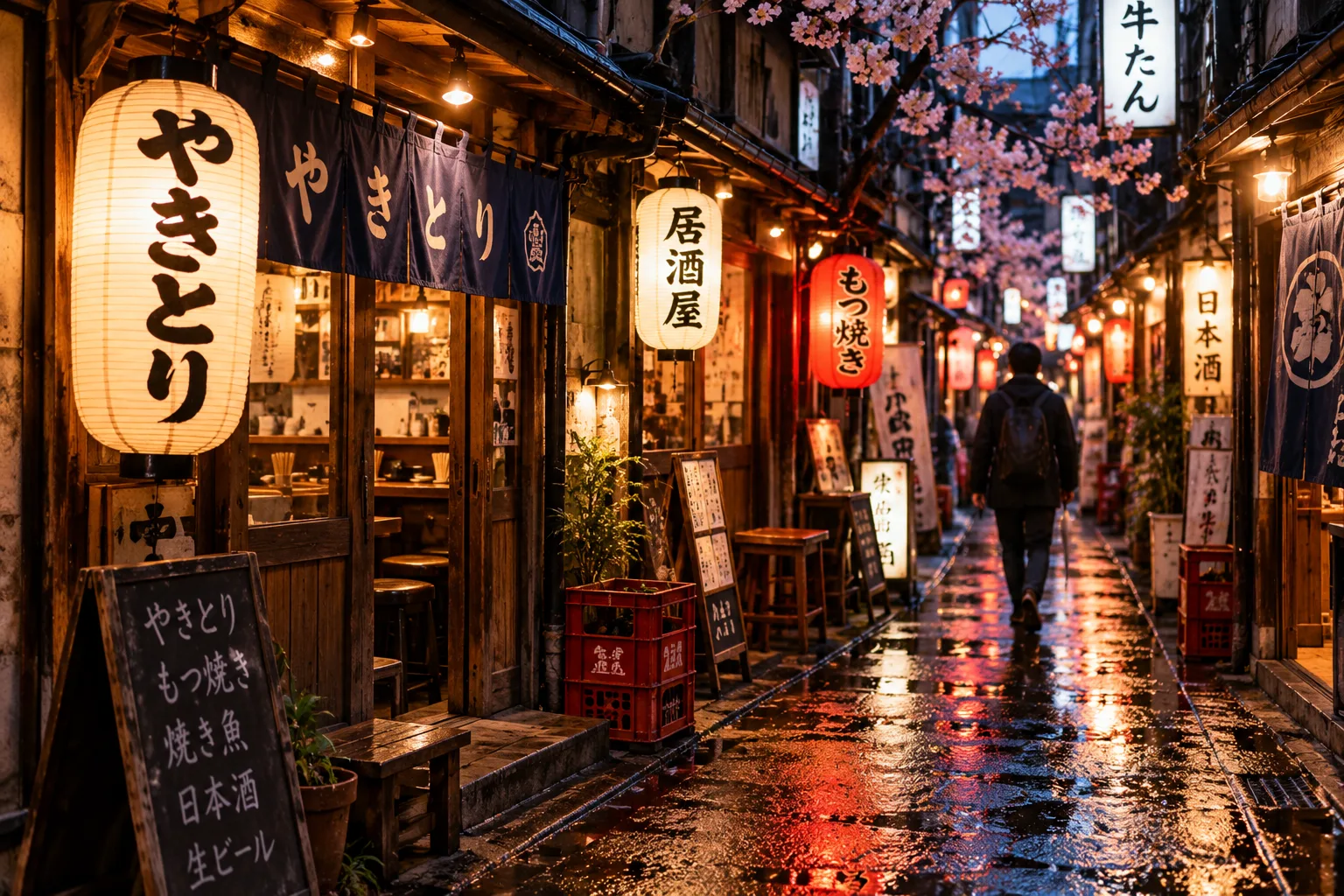

 Kayiwa · · 5 min read
Japanese cooking is organised around subtraction. Most great cuisines build flavour by adding — more spice, more fat, longer reduction. Japanese technique is largely about removing everything that is not the ingredient, then making the ingredient taste more like itself. That is harder, and it is why the apprenticeships are so long.
Dashi, and the fifth taste
Underneath almost everything is dashi: a stock made in ten minutes from kombu seaweed and katsuobushi, skipjack tuna that has been smoked, dried and fermented until it is hard enough to strike like wood and is shaved into paper. No bones, no browning, no hours on the stove. It is the fastest great stock in world cooking and the least forgiving, because there is nothing in it to hide behind.
Dashi is also where the science came from. In 1908 the chemist Kikunae Ikeda, working out why kombu broth tasted savoury in a way that could not be explained by sweet, salty, sour or bitter, isolated glutamate and named the taste umami. Every conversation about umami anywhere in the world traces back to a pot of seaweed stock in Tokyo.
Two centuries alone, and no meat for twelve
Two historical facts shaped the food more than any chef did. The first is that eating four-legged animals was effectively prohibited for around twelve centuries, from a Buddhist-influenced imperial decree in the seventh century until the Meiji period. Protein came from fish, soy and eggs, which is why the fermentation tradition — miso, soy sauce, sake, mirin, pickles — became so deep: it was doing the work that meat does elsewhere.
The second is sakoku, more than two centuries of near-total closure to the outside world until the 1850s. A cuisine left alone that long refines rather than expands. When Japan did open, it absorbed foreign food fast and then rebuilt it as something local: that is the origin of yoshoku — tonkatsu, curry rice, omurice — which is Western food naturalised so thoroughly that most Japanese people consider it Japanese, correctly.
Sushi was preservation before it was luxury
Sushi began as narezushi: fish packed in salt and fermenting rice for months, where the rice was a preservative and was thrown away. The rice becoming part of the dish came later, vinegar replacing fermentation later still.
What the world now calls sushi — a slice of fish pressed onto seasoned rice by hand — is Edo-mae nigiri, and it appeared in the 1820s as fast food, sold from stalls to workers in Edo, eaten standing, in two bites, with the fingers. Every element of the modern high-end sushi counter is a refinement of street food from two hundred years ago. The reverence came afterwards.
Ramen has a similar story in reverse: Chinese in origin, Japanese in execution, and almost entirely a twentieth-century phenomenon. Instant noodles were invented in Japan in 1958, went on to sell in the hundreds of billions of servings a year worldwide, and are arguably the single most consequential food product any country has exported.

Seasonality as a rule, not a slogan
Shun is the idea that every ingredient has a short window when it is at its best, and that serving it outside that window is a small failure. It runs deeper than menu marketing: it shapes what is on the plate, the colour of the plate itself, the garnish, and sometimes the room.
The everyday structure is ichiju-sansai — one soup, three dishes, with rice. It is a template for balance rather than a recipe, and it explains why a modest Japanese lunch arrives as five small vessels instead of one large plate.
In December 2013 UNESCO inscribed washoku — traditional Japanese dietary culture — on its Intangible Cultural Heritage list, recognising the practice and its social role rather than any individual dish. Japan had lobbied for it partly out of concern that the tradition was weakening at home, which tells you something: the country most associated with culinary precision was worried its own people were drifting from it.
Where it stands now
Tokyo has held more Michelin stars than any other city in the world for most of the years since the guide arrived there in 2007, usually by a wide margin over Paris. Take that as evidence of density and consistency rather than superiority — the guide inspects where it publishes, and it publishes heavily in Japan — but the density is real: this is a city where a nine-seat counter run by one person for thirty years is a normal business model.
Japanese cuisine also sits near the top of most global cuisine rankings, typically inside the top ten. Those lists are popularity-weighted, and Japan benefits from sushi and ramen being eaten everywhere. The more interesting number is the export figure: Japanese food and drink exports have grown for years running, with sake, soy sauce, wagyu and green tea driving it.
The pressure is domestic. Japan is ageing and shrinking, and the traditional trades — soy sauce brewers working in wooden barrels, small sake breweries, knife makers, shaved-katsuobushi producers — are losing successors faster than they are gaining them. The cuisine’s international standing has never been higher at exactly the moment its craft base is thinning. If you want to eat at a place that has been doing one thing for four generations, the honest advice is to go sooner rather than later.
What to eat, and how to judge it
- A proper bowl of soba, and drink the soba-yu — the cloudy cooking water — afterwards. Buckwheat quality has nowhere to hide.
- Sushi at a counter at lunch. The same fish and the same hands as dinner, at a fraction of the price.
- Tonkatsu — the best argument for yoshoku, and a lesson in frying.
- A kissaten breakfast — thick toast, egg, siphon coffee, in a coffee house that has not been redecorated since 1974.
- Konbini food, without apology. Onigiri and egg sandwiches from a chain store are genuinely good, and that fact says more about Japanese food standards than any tasting menu.
Costs, cities and a two-week route are in the Japan travel guide.
