
 Kayiwa · · 4 min read
North African cooking — Morocco, Algeria, Tunisia, Libya and Egypt — sits at the junction of the Sahara, the Mediterranean and the Arab world, with Amazigh (Berber) foundations underneath all of it. It is the part of Africa European kitchens borrowed from first, and the part most often mistaken for Middle Eastern.
Couscous, and a shared inscription
Couscous is not a grain. It is semolina rolled by hand with water into tiny pellets, then steamed — traditionally three times, over the stew it will be served with, so it absorbs the vapour. Done properly it is light and separate; done from a packet in five minutes it is a different food wearing the name.
In 2020 UNESCO inscribed the knowledge, know-how and practices of couscous on its Intangible Cultural Heritage list — and did so as a joint nomination from Algeria, Mauritania, Morocco and Tunisia. Given how often these countries dispute culinary ownership, a shared inscription was the diplomatic achievement as much as the culinary one.
Slow pots and preserved things
The tagine is a conical earthenware lid that returns condensation to the pot, letting meat and vegetables cook for hours in very little liquid — a design response to scarce fuel and scarce water. What comes out is the region’s signature: lamb with prunes, chicken with preserved lemon and olives, kefta with egg.
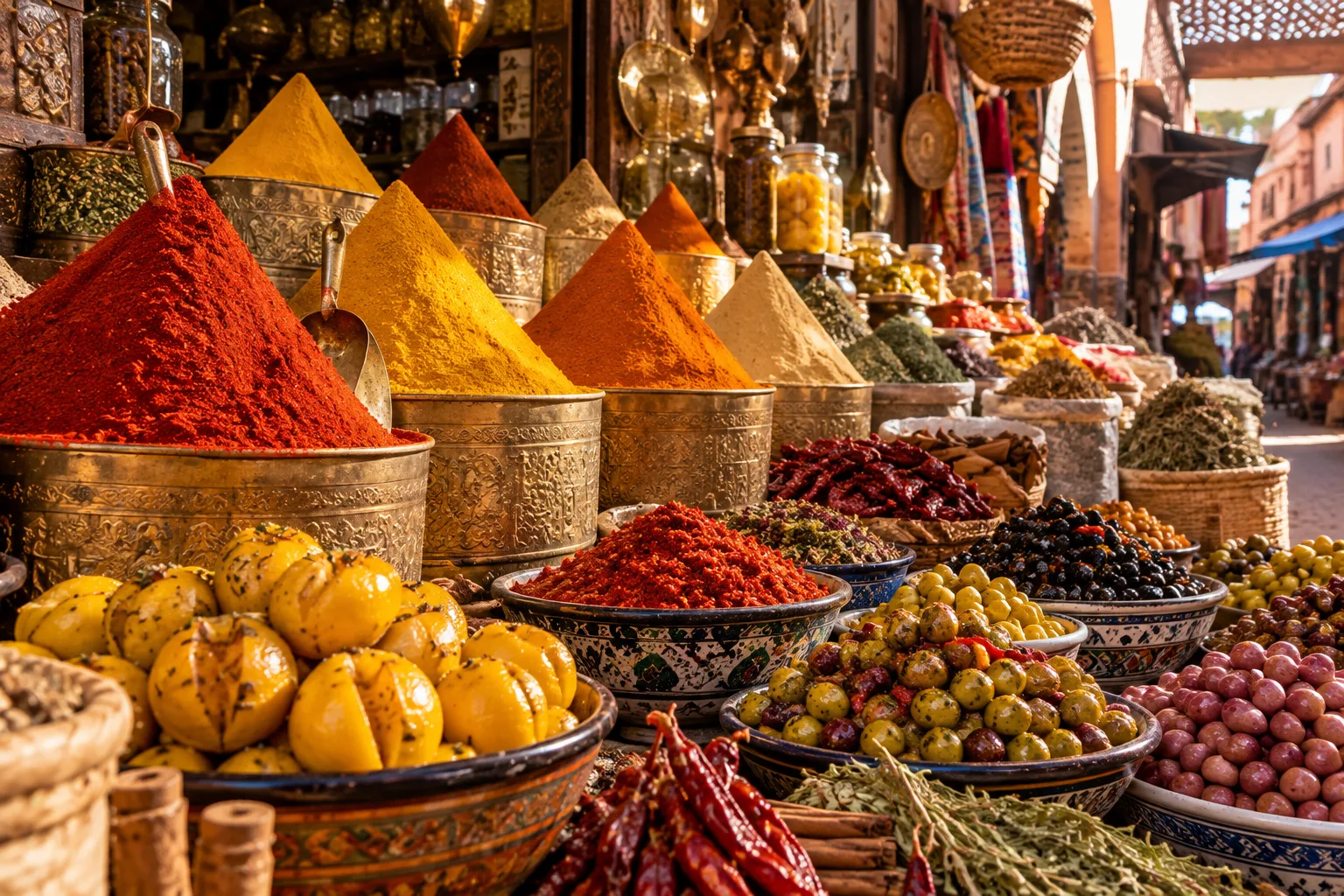
Two preserves define the flavour. Preserved lemons, salted and fermented for weeks until the peel goes soft and the sourness turns round and savoury. And harissa, the Tunisian chilli paste with garlic, caraway and coriander, which is its own UNESCO-recognised tradition and the thing that separates Tunisian cooking from its neighbours by heat alone.
Ras el hanout — literally head of the shop, the merchant’s best blend — can run to dozens of spices and differs in every market. Buying it is a conversation, not a transaction.

Egypt is its own case
Egyptian food is the most bean-centred in the region and the most street-driven. Ful medames — slow-cooked fava beans with oil, lemon and cumin — is breakfast for millions and is documented in Egypt over an extraordinarily long period. Koshari, the national street dish, layers rice, lentils, macaroni, tomato sauce, chickpeas and fried onion in one bowl, and its cheapness is the point: it is a working city’s food.
Four inheritances in one pot
North African cooking is a stack of layers, and you can usually name which layer a dish came from. The Amazigh base is the oldest: couscous, barley, olives, dates, slow pot cooking, and the pastoral use of every part of an animal. The Arab layer brought spice, rice, sugar and the sweet-savoury combinations of the medieval Islamic kitchen.
The Andalusi layer arrived with Muslims and Jews expelled from Spain, carrying citrus, almonds, pastry technique and a court cuisine into Fez, Tlemcen and Tunis — which is why Moroccan cooking has a refinement that surprises people expecting only rustic tagines. And the Ottoman layer, strongest in Tunisia, Libya and Egypt, left pastry, brik and a taste for filled and fried things.
French colonisation added the last layer, and it runs both ways: baguettes and cafes across the Maghreb, and couscous now consistently voted among the favourite dishes in France itself.
Bread, and the communal oven
In older Moroccan neighbourhoods, households still send dough to a shared wood-fired oven, the farran, and collect the baked loaves later — each family’s marked so it comes back to the right door. The same building often heats the neighbouring hammam. It is a piece of urban infrastructure that has survived because it works, and it is worth seeking out.
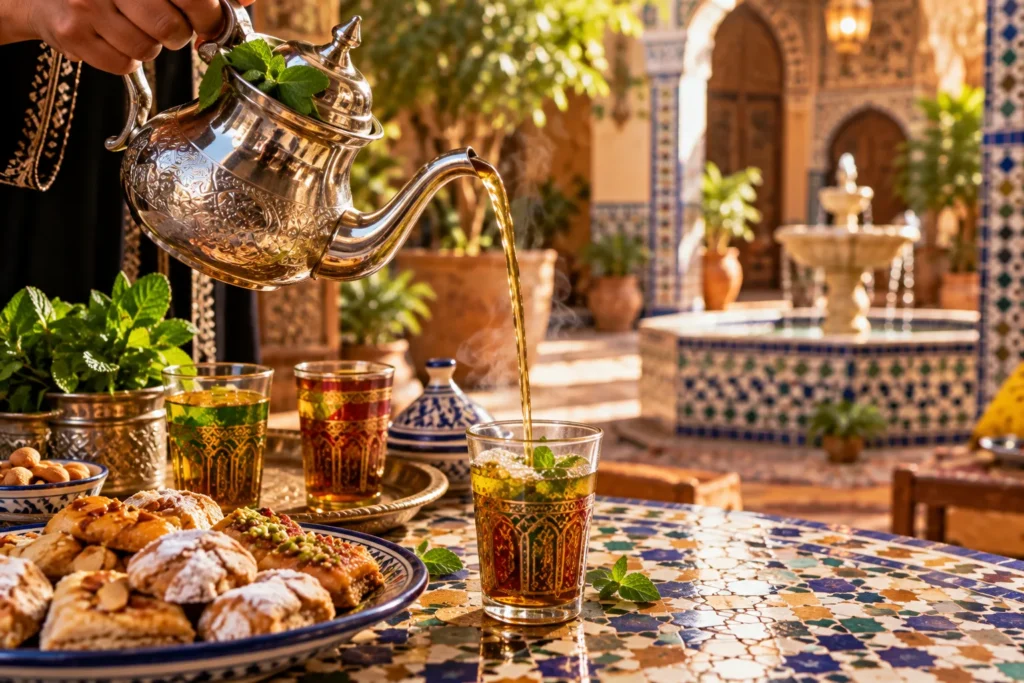
Mint tea is the other constant: green tea, a bundle of fresh mint, a great deal of sugar, poured from a height to aerate it, served three times with a proverb about the first glass being gentle, the second strong and the third bitter. Declining all three is not really available to you.
Where it stands now
Moroccan cooking is the best-known North African cuisine abroad, carried by tourism and by a large diaspora in France, Belgium, Spain and the Netherlands, and it generally ranks highest of the African cuisines on global lists. Tunisian and Algerian cooking are less visible internationally and no less good; Egyptian street food is famous in the region and barely exported at all.
Mint tea, poured from height, sweet, and refused at your peril, is the constant across all of it.