
 Kayiwa · · 3 min read
My first reaction, out loud, on camera, was: the bread is sour.
That is not a complaint, although it sounded like one at the time. It is the single thing nobody warns you about before your first Ethiopian meal, and it is the thing that makes the whole plate work once you get it.
I had no idea what to order, so I asked
Taye Ethiopian Restaurant in Bangkok, first time, completely outside my comfort zone. The menu had a meat combo, and a run of shakes I had never seen anywhere — Ethiopian flour, barley mango, banana, flax seed.
Rather than guess, I asked the waitress what she would give someone eating Ethiopian food for the first time. She picked two things, and both were right.
This is the most useful thing in the post and it costs nothing. The person who eats this every day knows better than you do.
Shekla tibs
Tender beef cooked with onions, tomatoes, garlic and peppers in a blend of traditional Ethiopian spices, and served sizzling in a traditional clay pot.
The beef was genuinely tender and carried a lot of flavour. The onions and peppers bring sweetness and freshness against it, and the spice blend gives it a warm, aromatic edge rather than raw heat. I understand completely why this is the dish people are pointed at first.
The platter, and the bread that is also the plate
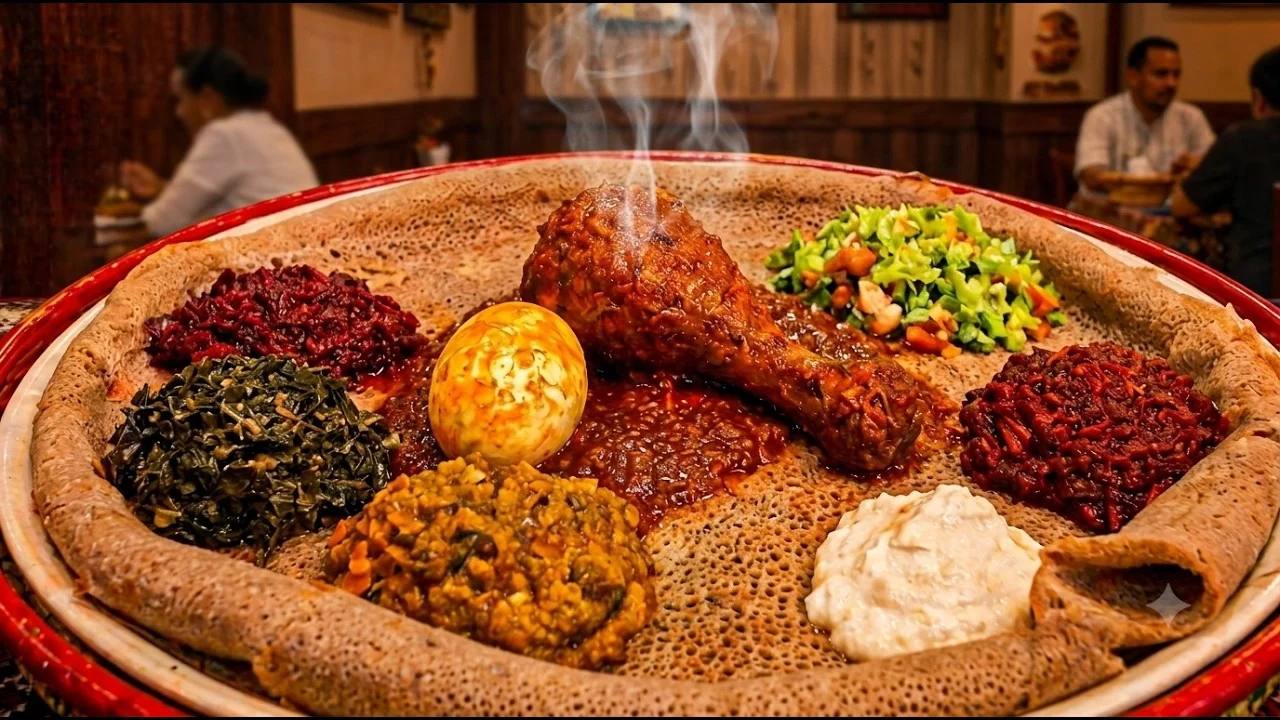
The second dish arrived as a large round tray covered in injera, Ethiopia’s fermented sourdough flatbread. Spread across it: vegetables, lentils, chickpeas, a fresh salad, and a flavourful sauce with yoghurt.
Injera is not a side. It is the plate and it is the cutlery. You tear a piece off, scoop up a stew with it, and eat both together. No fork, no spoon, and eating with your hands here is not a gimmick — it is what makes the meal shared and interactive rather than everyone defending their own plate.
Back to the sourness
Injera is soft and spongy with a distinct tang, and that comes from the fermentation. On the first bite it is surprising. By the third or fourth, it clicks: the sourness is there to cut through rich stews, the same job a squeeze of lemon does elsewhere.
So do not judge it on bite one. Almost everyone does.
What kept me going round the tray was that every scoop was a different combination. The lentils were smooth and comforting. The vegetables were properly seasoned without shouting. Most of those spices were unfamiliar to me, which is exactly why it stayed interesting for a whole meal instead of settling into one note.
Worth it?
I am glad I stepped out of my comfort zone. Ethiopian food is unlike anything I had eaten before, and in a city everyone visits for Thai food, that is a real reason to go looking for it.
If you have eaten it before, tell me what to order next — I am going back.
The practical bit
- Where: Taye Ethiopian Restaurant, Bangkok
- Order: shekla tibs, and the traditional mixed platter if there are two of you
- Know first: the injera is the cutlery, and it is meant to taste sour
- Also on the menu: Ethiopian flour, barley mango, banana and flax seed shakes
- Video runtime: under 5 minutes
More first meals and street food are on the food page, and there is a whole piece on what years of travel taught me about ordering food.