
 Kayiwa · · 7 min read
The first thing I got wrong was the menu. For about two years I would sit down, read every line, translate half of them and order the dish whose name I recognised. The food was fine. It was never the reason the place had a queue outside.
Ask what they cook, not what they have
Menus in small kitchens are historical documents. They list what the family sold in 1998, what a supplier once delivered cheaply, and what the printer had room for. The four dishes actually being cooked that morning are usually not on it.
So the question changed. Instead of what do you have, I started asking what are you cooking today. In Penang that got me a fish head curry that appeared on no board. In Kampala it got me the pot the cook had made for her own family, which is a different thing entirely from the pot she made to sell.
The phrasing matters more than it should. What do you recommend invites politeness, and politeness produces the safe dish — the fried rice, the grilled chicken, whatever the last tourist ordered without complaint. What are you cooking today asks about the kitchen's actual day, and people answer that honestly.
A menu tells you what a kitchen can do. The pot on the fire tells you what it is proud of.
Point at the table next to you
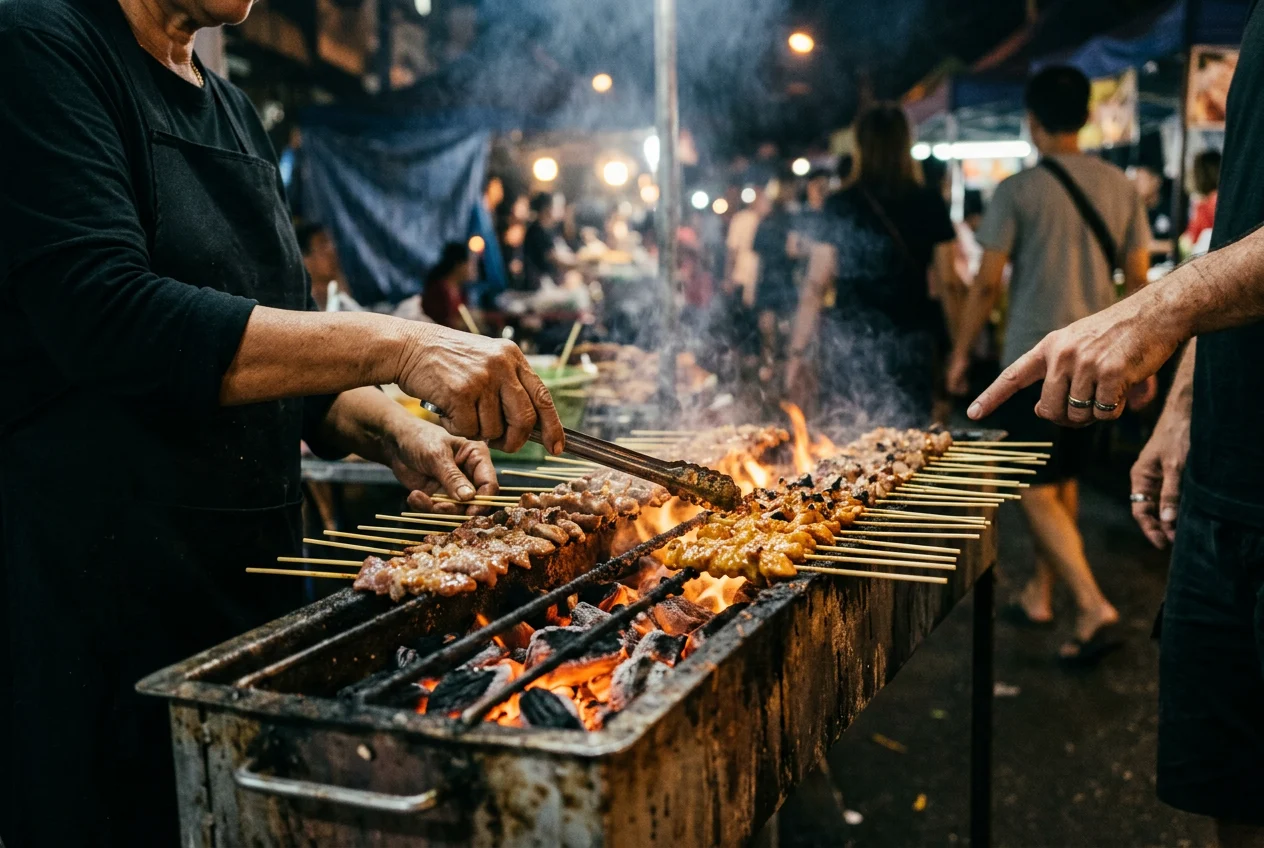
Language runs out fast. Pointing does not. If the room is full of people eating one thing, that thing is the answer, and every vendor I have met would rather bring it to you than watch you order badly.

The only rule is to ask the diner before the cook. Nobody minds explaining their lunch — most people are pleased to. Plenty of people mind a camera arriving before a hello.
This also solves the problem of not knowing what a dish is called. I have ordered a great many meals by walking up to a stranger, gesturing at their bowl and raising my eyebrows. It has never once been received badly.
Learn four words before you land
Not a phrasebook. Four words: delicious, thank you, this one, and how much. Everything else can be mimed. Those four cover the whole transaction and they change the temperature of it entirely, because they signal that you intend to be a customer rather than an audience.
- Delicious — said with the mouth full, it does more work than any tip.
- Thank you — in the local language, every single time.
- This one — paired with a point, it orders anything.
- How much — asked before eating, it prevents the only argument worth avoiding.
I learn them on the flight. Badly pronounced is fine. The effort is the message, not the accent.
Pay the local price and say so
I put prices in every video because the alternative is a channel full of meals nobody can plan around. If I was charged a tourist rate, that goes in too. It costs nothing to be accurate and it is the only thing that makes a recommendation useful a year later.
People sometimes read this as a complaint about being overcharged. It is not. A stall that charges me double is making a reasonable commercial decision about a man with a camera. I just want the reader to know which number they will meet.
Years in, the method has not got more sophisticated. Find the busy stall, ask what is cooking, point if the words fail, pay what it costs, and say thank you properly. The food does the rest.