
 Kayiwa · · 6 min read
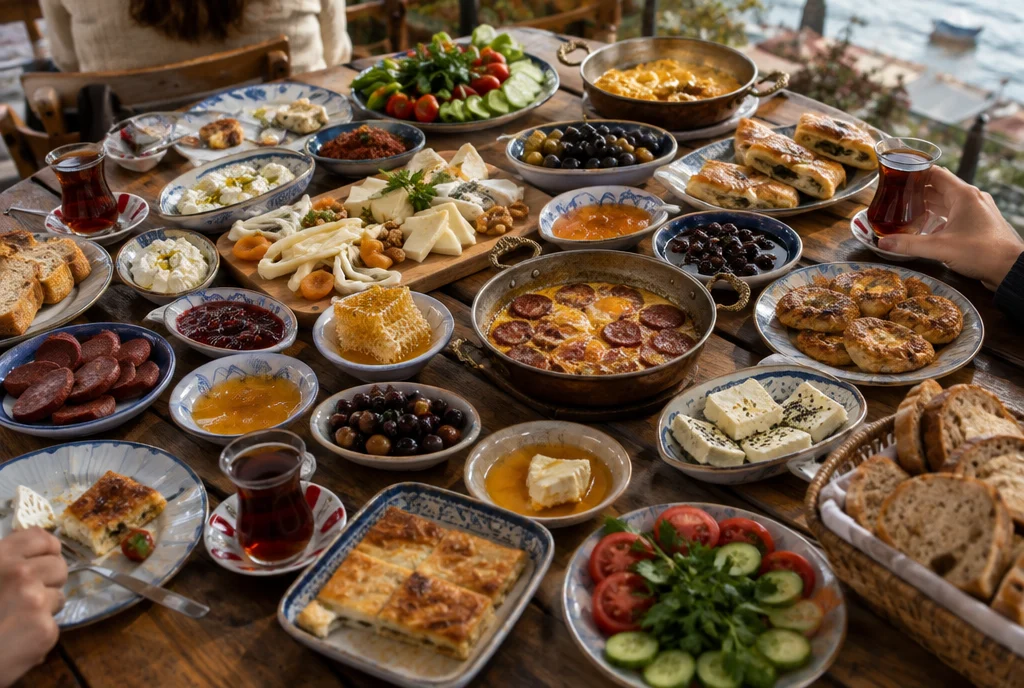
The word is kahvaltı, which translates roughly as before coffee, and it describes a meal that can occupy an entire morning. Order the full version — serpme kahvaltı, meaning scattered — and between ten and twenty small plates arrive at once, with a glass of tea that will be refilled until you physically stop it.
What arrives at the table
There is a canonical set, and then there is whatever the kitchen felt like. The canonical set:
- Cheeses — usually three: a salty white beyaz peynir, a stringier kaşar, and something aged.
- Olives — green and black, separate bowls, dressed in oil and sometimes thyme.
- Tomato and cucumber — sliced thick, unseasoned, and more central to the meal than they sound.
- Eggs — either menemen, scrambled soft with tomato and pepper, or sucuklu yumurta with spiced sausage.
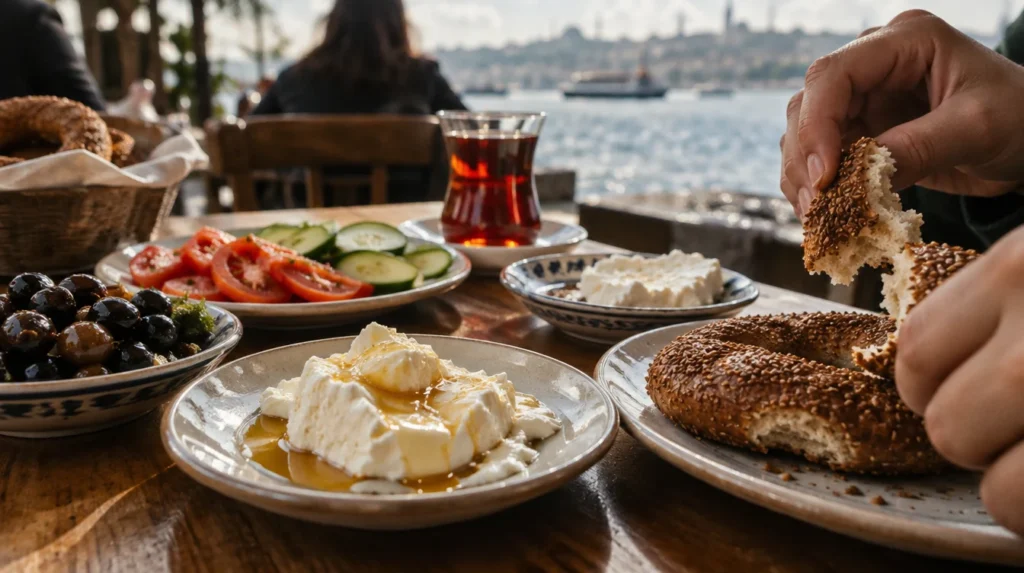
- Kaymak and honey — clotted buffalo cream with honey poured over it. The high point.
- Jams — three or four, often including sour cherry and rose.
- Börek — layered pastry with cheese or potato.
- Bread — a great deal of it, replaced without asking.
Then the regional additions: çılbır, poached eggs in garlic yoghurt with chilli butter, which is the single best thing on any breakfast table anywhere. Van province does a herbed cheese called otlu peynir. On the Black Sea coast you get mıhlama, a molten cornmeal-and-cheese dish eaten straight from the pan.
Why it takes two hours
Because there is no main course, so there is no moment when the meal is over. You graze, the tea keeps coming, the bread gets replaced, and the conversation is the structure rather than the food. Sunday breakfast in Istanbul routinely runs from ten until one.
Nobody will bring you a bill until you ask, and asking early reads as odd. The table is yours for as long as you want it, which is an unusual bargain in a city where rent is what it is.
A meal with no main course has no natural end. That is not an accident, it is the design.
How to order it
Say serpme kahvaltı and the number of people. Do not say kahvaltı alone in a tourist area, or you may get a plate with two eggs and a croissant on it. The full spread is priced per person and in 2026 runs roughly 250 to 400 lira in Istanbul, more on the Bosphorus terraces where you are paying for the view.
Two practical notes. Tea is included and endless; asking for coffee at the start marks you as a foreigner, because the coffee comes after, which is what the name of the meal means. And the eggs are usually cooked to order rather than sitting on the tray — if menemen has not arrived, it is coming.
The version that travels
Most of it does not survive the trip home, because it depends on a cheese counter and a bakery within walking distance. But the shape does. Four or five small plates, good bread, sliced tomato with nothing on it, and a pot of tea that stays on the table.
The thing worth importing is not the ingredient list. It is the idea that breakfast can be the event rather than the thing you do before the event.


