
 Kayiwa · · 4 min read
Gulf cooking — Saudi Arabia, the UAE, Oman, Kuwait, Qatar, Bahrain and Yemen — is the most misread food in the Middle East, because visitors meet it in shopping malls rather than in homes. What it actually is: a desert and seafaring cuisine reshaped by a thousand years of Indian Ocean trade.
The Indian Ocean did the seasoning
Dhows carried dates, pearls and horses out and brought rice, spices and technique back. That is why Gulf food tastes closer to the Indian subcontinent and the Swahili coast than to the Levant: cardamom, cinnamon, cloves, turmeric, dried lime and black pepper, layered with rice and meat in one pot.
The signature blends carry that history. Baharat is the warm spice mix across the region; bezar in the Emirates; hawaij in Yemen. Loomi — limes boiled in salt water and dried until they rattle — is used whole or ground and gives the sour, slightly fermented backnote that identifies Gulf cooking immediately.
One pot, one platter
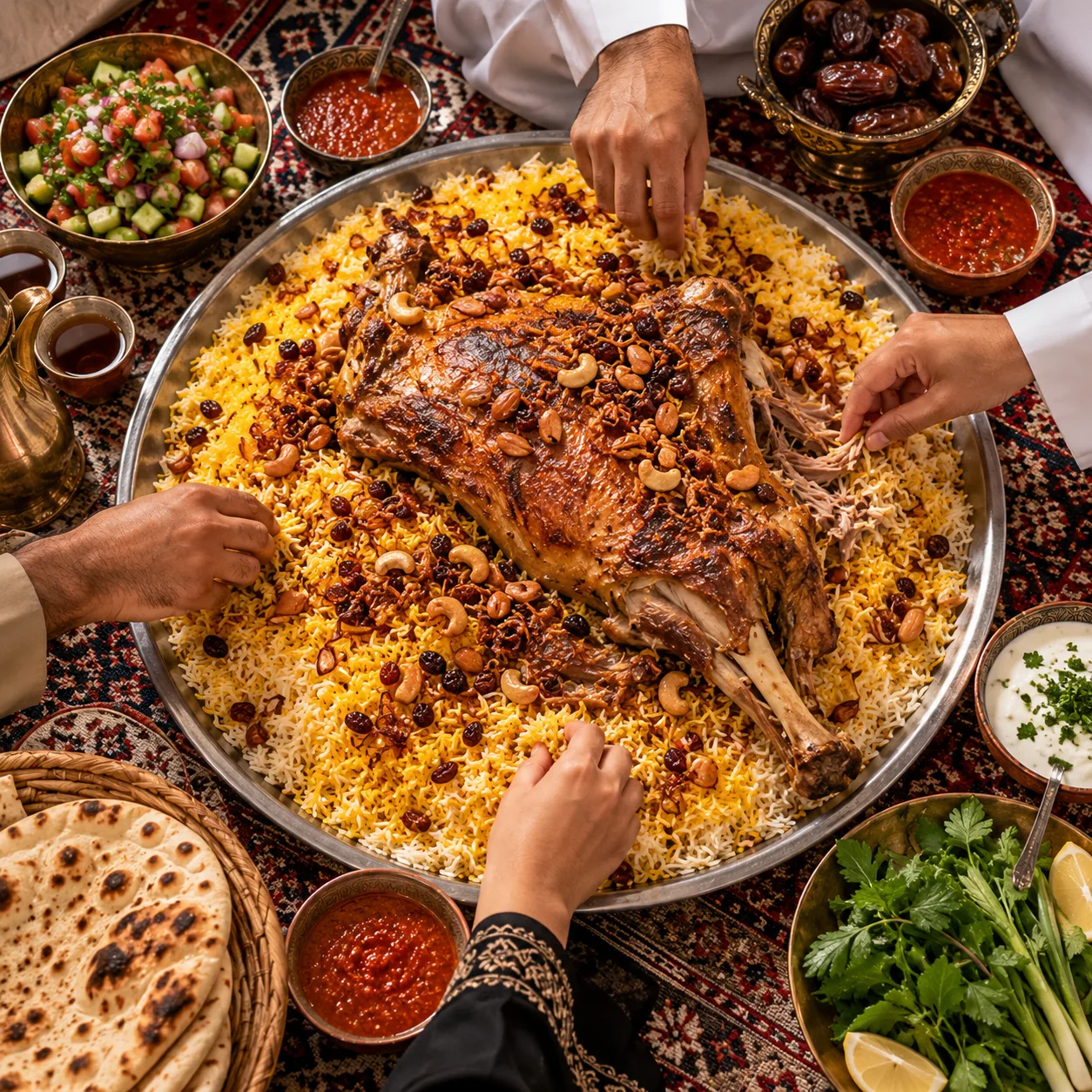
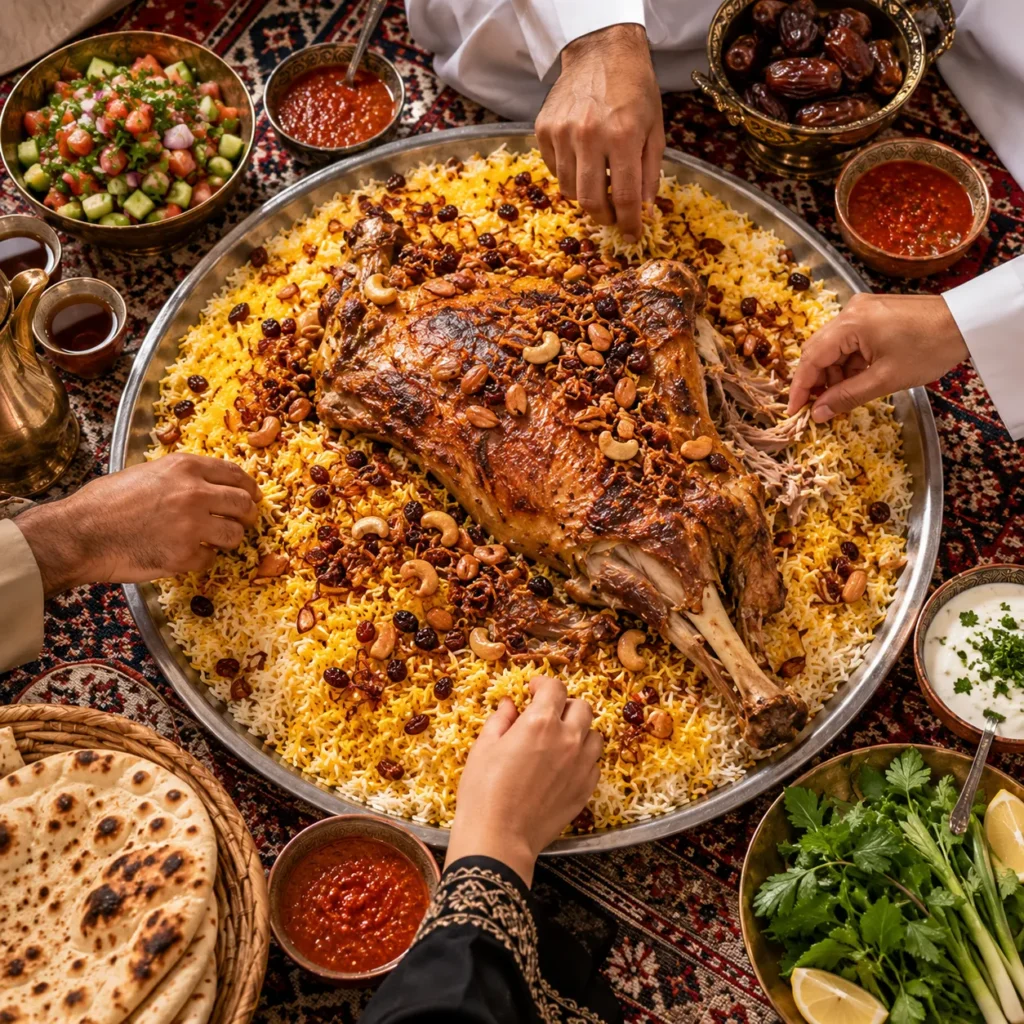
Kabsa or machboos is the dish to understand: rice cooked in a spiced broth with lamb, chicken or fish, served on a communal platter, often with a sharp tomato chilli sauce called daqqus on the side. Madfoon and mandi cook the meat underground or in a pit oven over the rice so the fat drips through it.
Yemeni cooking sits slightly apart and punches hardest: saltah, a bubbling stew finished with whipped fenugreek foam, and haneeth, slow pit-roasted lamb. Yemeni restaurants have spread across the Gulf and beyond, and they are usually the best value meal in any Gulf city.
Dates, coffee and the order of a welcome
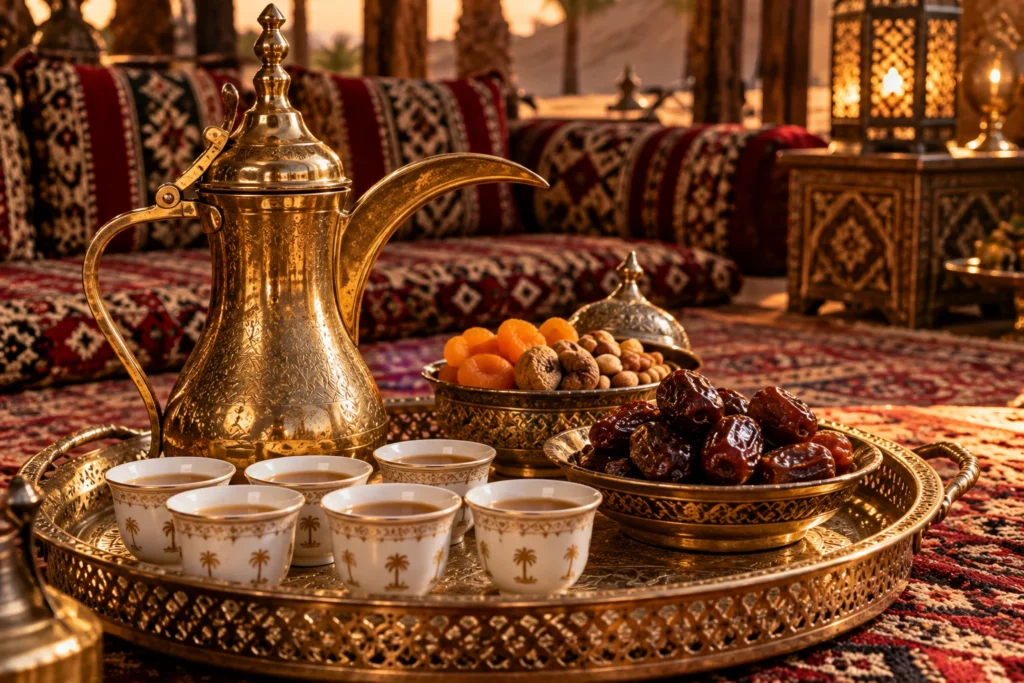
Arabic coffee — qahwa, pale, cardamom-heavy, barely bitter, served in small handleless cups — arrives with dates and is poured by the host, who keeps refilling until you tilt the cup. UNESCO recognised the practice as intangible heritage, and it is worth learning the cup-tilt before you travel, because otherwise it does not stop.
Dates are not a snack here but an agricultural backbone with named varieties treated the way France treats wine grapes. Try khalas, sukkari and the enormous medjool side by side and the distinctions become obvious fast.
Before the oil, there was the sea and the palm
Within living memory the Gulf economy was pearling, fishing, date cultivation and trade. That is the food’s actual foundation, and it explains a cuisine that looks austere next to the wealth around it: dried and salted fish, rice brought in by dhow, dates that store for years, camel and goat rather than beef, and flatbread.
Dried fish still turns up where visitors do not expect it — machboos made with salted hammour, or the intensely pungent dried shark and fish sauces of Oman and the Emirates. Preservation was not a style choice in a place with that climate and no refrigeration.
The date palm was the other pillar: fruit, fodder, timber, rope, shade and sugar from one tree. Dates are eaten at the start of a meal, offered with coffee to every visitor, and used to break the fast at Ramadan. In a region with almost no natural sweetness available historically, they were the sweetness.
The majlis, and how a meal is arranged
The majlis — the sitting room where guests are received, often with cushions around the walls — is where the eating happens, and it sets the form: food on a cloth on the floor, everyone reaching to the part of the platter nearest them, the right hand only, no individual plates, and the host pressing more on you throughout.
Men and women may eat separately depending on the household and the occasion; if you are invited, follow your host’s lead rather than the assumption you arrived with. And eat something. Declining outright reads as a judgement on the house.
Where it stands now
Gulf cities are among the most restaurant-dense on earth, but the great majority of what they serve is imported — Indian, Filipino, Levantine, Iranian, European — cooked by a workforce that is itself largely migrant. Local Gulf cuisine is comparatively hard to find commercially and is mostly eaten at home, which is why it barely registers in global cuisine rankings despite the region’s wealth and visibility.
That is changing slowly as Emirati and Saudi restaurants open deliberately for visitors. If you are in the region, seek one out rather than eating the international menu twice.