
 Kayiwa · · 6 min read
A market is somebody's workplace. That is the whole of the etiquette, and everything below is just the practical consequence of taking it seriously. I have filmed in maybe two hundred markets and been asked to leave twice, both times deservedly, both times early on.
Ask, every time
Not a raised camera and hopeful eyebrows. An actual question, in the local language if I can manage it, before the lens comes up. Almost nobody says no. The ones who do are usually mid-transaction and would have said yes ten minutes later.
What asking really buys is not permission. It is the difference between filming a vendor and filming with one. The moment somebody has agreed, they start performing a little, explaining things, holding produce up to the light. That footage is better than anything I would have stolen.
Nobody has ever been rude to me after I asked first. That is not a moral claim, it is a practical one.
Buy something
Always. A bag of mangoes, a bottle of water, a portion of whatever is on the grill. It is not payment for the footage and it should not be framed that way — it is the reason to be standing there at all. A customer with a camera is a customer. A man with a camera who buys nothing is a nuisance.
This has a second effect. Handing over money establishes the ordinary shape of the interaction, and the conversation that follows is much easier than one that starts with a request.
Keep the rig small
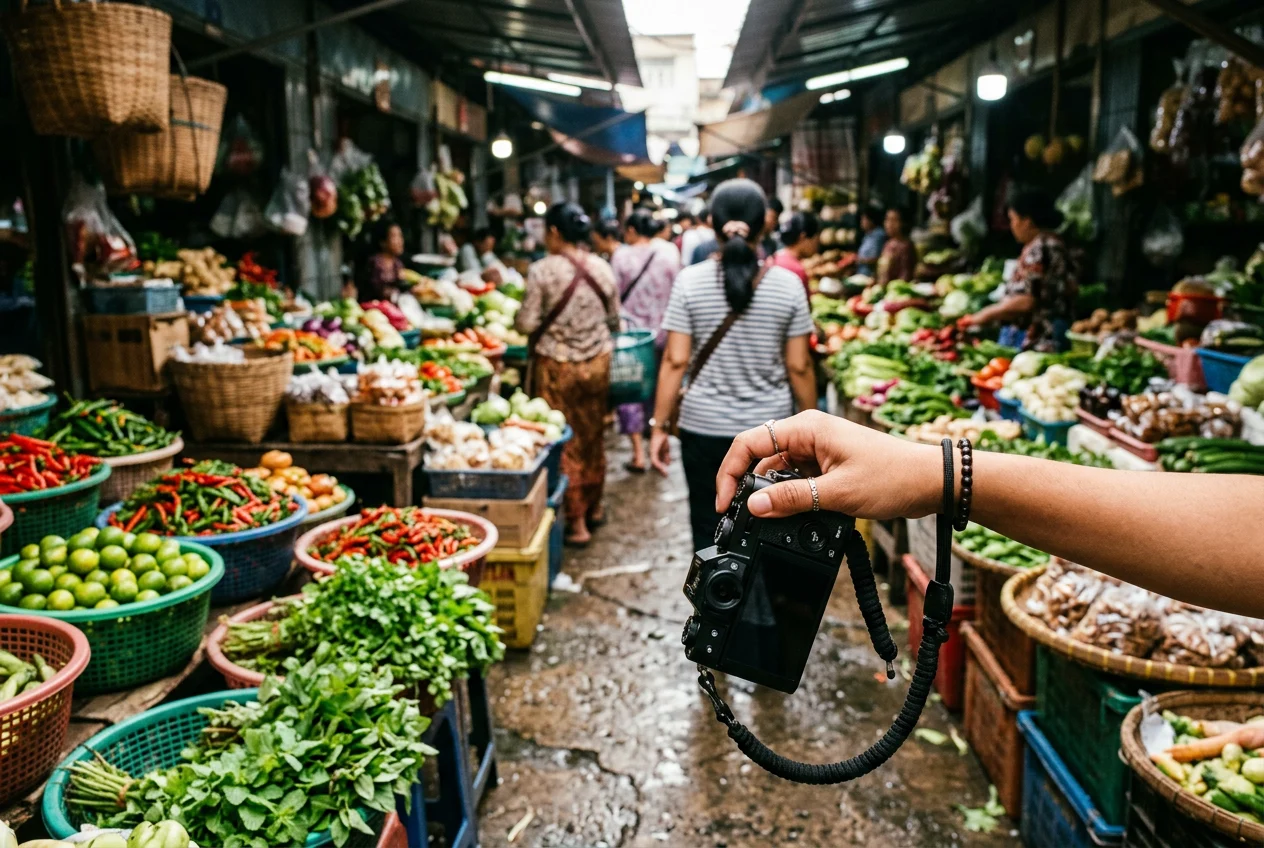
One body, one lens, no tripod, no external monitor, no microphone on a boom. The size of the setup determines how people treat you, and a large one turns a conversation into a production. Nobody talks naturally to a rig.
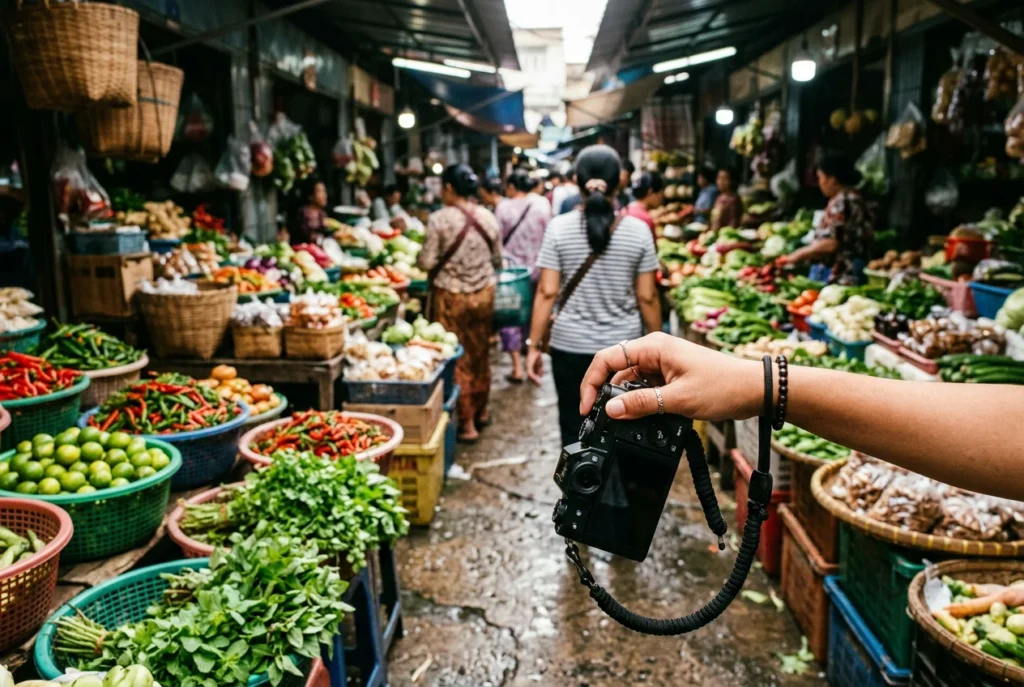
- One camera, held low, screen out so people can see what I see.
- A wide-ish prime, which forces me to stand close enough to be part of the scene rather than surveilling it.
- A lav mic in a pocket instead of anything pointed at anyone.
- No lights, ever, in someone else's stall.
Showing people the screen is the single most useful habit I have. It turns the camera from a thing being done to them into a thing being shared, and it takes four seconds.
Know when to stop
There are moments when the camera should be down and it is usually obvious: an argument, a religious observance, anyone crying, anyone eating who did not agree to be filmed, children without a parent nearby. Prayer times in particular — I put the camera in the bag rather than merely lower it, because the gesture is legible.
The other stopping point is subtler. When a vendor has answered three questions and their queue has grown, the interesting part is over and I am now costing them money. Thank them, buy one more thing, leave.
None of this is complicated and none of it is about being nice. It is about the fact that the footage is better when people want you there, and markets remember faces. I have gone back to the same stall in Bangkok for six years, and the reason I am still welcome is that the first time, I asked.