
 Kayiwa · · 8 min read
East African food splits along a line most visitors never notice: the highlands, where the staples are bananas, maize and teff, and the coast, where a thousand years of Indian Ocean trade produced something closer to Kerala than to Kampala.
Kampala is where the rolex comes from, and this is the city. This is episode two of my series on the capital, on the sites worth your time.
The highlands: matooke, ugali, nyama
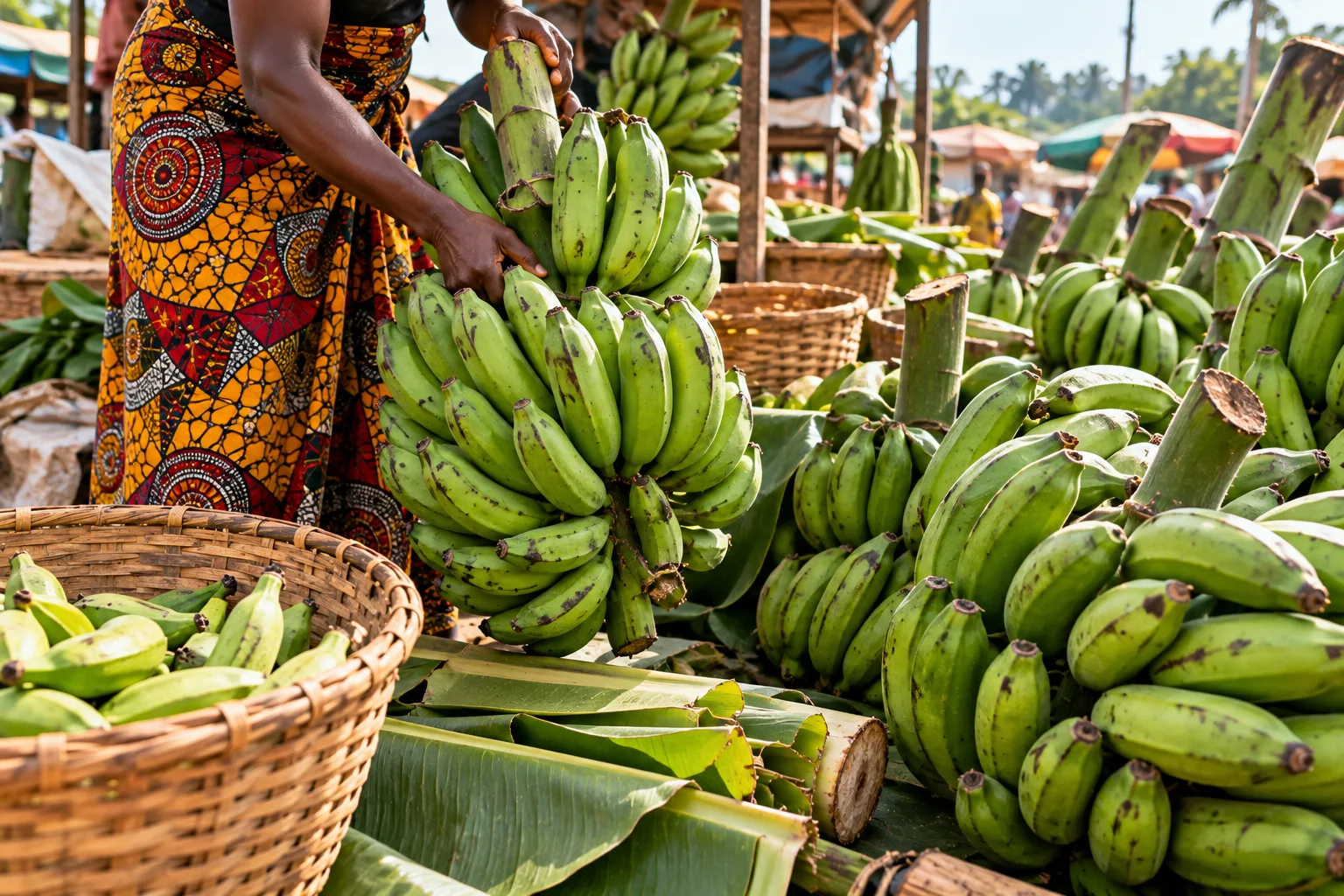
In Uganda the staple is matooke — green cooking bananas steamed in their own leaves until soft and pale yellow, then mashed and eaten with groundnut sauce, beans or meat. It is not a side dish or a fruit; it is the centre of the plate and the thing people mean when they say they have not eaten today.
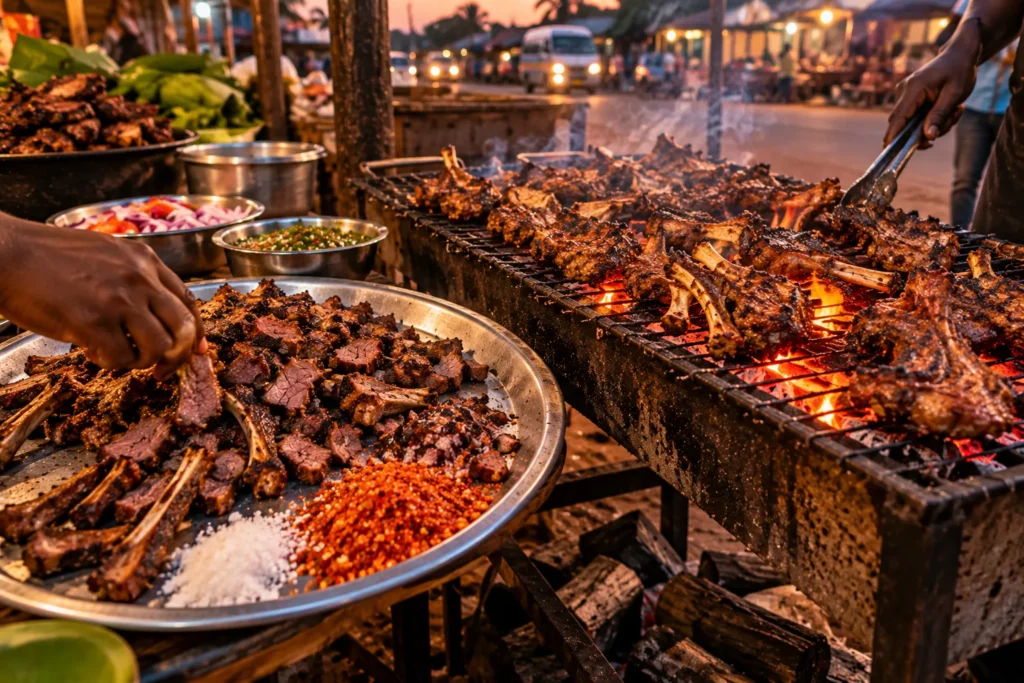
Across Kenya and much of the region, the staple is ugali: maize meal cooked stiff, cut rather than spooned, used to pinch up sukuma wiki, beans or stew. Add nyama choma — goat or beef grilled slowly over charcoal, eaten communally, usually with a pile of salt and chilli on the side — and you have the two dishes that define eating out in East Africa.
Ethiopia and Eritrea stand apart with injera and the wot stews, which have their own piece.
The Swahili coast is a different cuisine
From Mombasa down through Zanzibar and Dar es Salaam, the cooking uses coconut milk, tamarind, cardamom, cumin, cloves and rice, because this coast traded with Arabia, Persia and India for centuries before Europeans arrived. Zanzibar was a global clove producer, and the spice trade is not history here but an industry.
Eat pilau and biryani cooked with a local hand, wali wa nazi — coconut rice — with fish curry, mishkaki skewers from a street grill, and mandazi for breakfast. The South Asian influence is also direct rather than ancient: large Indian communities across Kenya, Uganda and Tanzania made samosas, chapati and masala chai everyday East African foods. Ugandan rolex — a chapati rolled around a fried egg — exists because of that.
Tea, coffee and who gets to drink it
Kenya is one of the largest tea exporters in the world and Uganda grows both tea and coffee, yet for a long time the best of it left. That is changing: Nairobi and Kampala now have roasteries buying local beans at grade rather than shipping everything out green, and it is worth drinking Ugandan coffee in Uganda rather than assuming the export is better.
The everyday drink is tea boiled with milk, sugar and often ginger — strong, sweet, closer to the South Asian version than to anything British, despite the colonial plantation history. With a chapati, it is the region’s default breakfast and costs very little.
Three food cultures in one region
What makes East Africa unusual is how cleanly three influences sit side by side without merging. There is the indigenous highland base — bananas, millet, sorghum, maize, beans, groundnut, greens — which is what most people eat at home. There is the Indian Ocean layer along the coast, with coconut, rice and spice. And there is the South Asian layer, carried by traders and by indentured labourers brought to build the railway, which made samosa, pilau and flatbread ordinary local food.
You can eat all three in a single day in Kampala or Mombasa, and nobody regards any of them as foreign. The rolex is the clearest proof: an Indian flatbread, an egg, and whatever vegetables are to hand, invented on a Ugandan street and now the most recognisable Ugandan food in the world.

What to order first
If you only have a few meals, these are the ones I would point you to. Prices are from my Uganda guide and Kenya guide, in local currency, with approximate conversions at the 5 October 2026 rates (about UGX 3,900 and KES 130 to the US dollar). They move a little every day.
| Dish | Where | Price | ≈ US$ | ≈ € | ≈ £ | What it is |
|---|---|---|---|---|---|---|
| Rolex | Uganda | UGX 2,000–5,000 | $0.51–1.3 | €0.45–1.1 | £0.38–0.96 | Chapati rolled around an omelette with cabbage, tomato and onion. |
| Katogo | Uganda | UGX 5,000–12,000 | $1.3–3.1 | €1.1–2.7 | £0.96–2.3 | Matooke cooked with beans, offal or groundnut sauce. The standard breakfast. |
| Muchomo | Uganda | UGX 5,000–15,000 | $1.3–3.8 | €1.1–3.4 | £0.96–2.9 | Grilled goat or beef on skewers, roadside, with kachumbari salad. |
| Luwombo | Uganda | UGX 15,000–30,000 | $3.8–7.6 | €3.4–6.8 | £2.9–5.8 | Chicken, beef or groundnut stew steamed in a banana leaf. A special-occasion dish. |
| Tilapia from Lake Victoria | Uganda | UGX 20,000–40,000 | $5.1–10 | €4.5–9 | £3.8–7.7 | Whole, fried or grilled, with posho or chips. Best eaten lakeside. |
| Ugali | Kenya | KES 50–100 | $0.39–0.77 | €0.34–0.69 | £0.29–0.58 | Stiff maize porridge, the national starch. |
| Swahili fish curry | Kenya coast | KES 500–1,200 | $3.9–9.3 | €3.4–8.2 | £2.9–7 | Fish in coconut and tamarind with cardamom and cumin. |
| Nyama choma | Kenya | KES 800–1,600 a kilo | $6.2–12 | €5.5–11 | £4.7–9.3 | Goat or beef roasted over charcoal, ordered by weight and eaten by hand. |
The two cheapest and most useful things to learn are these: ask for a rolex at any roadside stand in Kampala, and order nyama choma by weight at a grill in Kenya. Between them you will understand most of how eating out works in the region.
How to eat it
- Use your right hand where people eat by hand. Ugali, matooke and chapati are all pinched and scooped. In many homes and grills the meal comes with water to wash your hands first.
- Order meat by weight. At a nyama choma grill you choose by the kilo, and it arrives on a board with salt, chilli and kachumbari.
- Greet before you ask. Greetings matter a great deal in Uganda. Ask how someone is before you ask for anything.
- Eat the rolex standing up. Eat it out of the paper before it cools. It does not survive being taken anywhere.
- Look for busy stands. As anywhere, food cooked to order in front of you, with a crowd waiting, is the safest bet.
- Try nsenene if it is in season. Fried grasshoppers with onion and chilli are around November and April, and they are the thing visitors are most reluctant to try.
When to go
For Uganda, the best months in my guide are December to February and June to August. For Kenya they are June to October and January to February. The grasshopper season falls around November and April. Use Taste Match to see how the two countries compare with the others for your dates, and save the dishes you want to try in My trip. Planning a first trip to Uganda? My first-timers guide covers the e-visa, yellow fever and money.
Where it stands now
East African food is barely represented in global rankings and only lightly represented in restaurants abroad, with the significant exception of Ethiopian cooking, which travelled with its diaspora. Ugandan and Kenyan food is mostly eaten at home or at informal grills, which means the way to eat it is to be there, or to find the community kitchens rather than the restaurants.
That is slowly changing as Nairobi and Kampala develop dining scenes aimed at their own middle classes rather than at visitors — which is usually the point at which a cuisine starts being documented properly.
Costs, routes and what to eat are in the Uganda guide and the Kenya guide. I have also filmed the rolex in Kampala.
Frequently asked questions
What is East African food?
It is a mix of three layers that sit side by side. The highland staples are matooke, ugali, millet, beans and groundnut sauce. The Swahili coast adds coconut, rice and spices such as cardamom, cumin and cloves. And South Asian cooking, brought by traders and railway labourers, gave the region samosas, chapati and pilau.
What is matooke?
Green cooking bananas steamed in their own leaves until soft, then mashed and eaten with groundnut sauce, beans or meat. In Uganda it is the centre of the plate, not a side dish.
What is ugali?
Maize meal cooked stiff and cut rather than spooned. You pinch it up with your hand and use it to scoop sukuma wiki, beans, stew or nyama choma.
What is a rolex in Uganda?
A chapati rolled around a fried egg, usually with cabbage, tomato and onion. It costs about UGX 2,000 to 5,000, which is roughly 50 cents to $1.30. The name comes from “rolled eggs”, and it has nothing to do with watches.
What is nyama choma?
Goat or beef grilled slowly over charcoal, ordered by weight and eaten communally, usually with salt, chilli and kachumbari on the side. In Kenya it is roughly KES 800 to 1,600 a kilo, about $6 to 12.
Is East African food spicy?
Mostly not. The highlands cook mild and put salt and chilli on the side. The Swahili coast uses more spice, with cardamom, cumin and cloves, in a fragrant rather than burning way.
Where should I start?
With a rolex in Kampala for breakfast, then nyama choma with ugali for dinner. The Uganda guide and the Kenya guide have the costs, routes and where to eat.
Sources
- Kayiwa Craves Uganda guide
- Kayiwa Craves Kenya guide
- The rolex, Kampala’s street food, explained
- Ethiopian food: the other East African cuisine
Prices and seasons are from my country guides, last checked in September 2026, and conversions use rates from 5 October 2026. They change, so treat the figures as a guide.